Landscaping Drainage Solutions for Auckland’s 2026 Wet Season Record
- Auckland received 47% more rainfall than average in the first five months of 2026, causing widespread landscaping drainage failures.
- Properly installed subsurface drainage costs $45-85 per linear metre but prevents retaining wall failure that costs $15,000-40,000 to rebuild.
- NZS 4229 requires specific drainage behind all retaining walls over 1.5 metres, but many existing installations don’t comply.
Drainage Cost Breakdown
Assess Your Current Drainage Problems
Start by walking your property during heavy rain to identify where water pools, flows incorrectly, or causes erosion. Look for saturated areas that stay wet for more than 24 hours after rainfall stops. Check around retaining walls for signs of movement, cracking, or bulging — these indicate hydrostatic pressure from poor drainage behind the wall.
Document problem areas with photos and note the slope direction. Water should flow away from structures and toward designated drainage points, not pool against foundations or retaining walls. If you see water running across paved areas instead of into drains, or creating channels through garden beds, you need to redirect the flow.
Choose Between Surface and Subsurface Solutions
Surface drainage handles water that flows overground during rainfall. This includes channel drains across driveways ($25-40 per metre installed), French drains along boundaries ($35-55 per metre), and swales through garden areas. Surface solutions work well for managing roof runoff and pathway drainage.
Subsurface drainage tackles groundwater and prevents water from building up behind retaining walls or under paved areas. Install perforated drainage pipe wrapped in geofabric, surrounded by 20mm drainage metal. This costs more upfront but prevents structural damage long-term. For retaining walls over 1.5m height, NZS 4229 requires subsurface drainage regardless of soil conditions.
Install Retaining Wall Drainage Correctly
Retrofit drainage behind existing retaining walls by excavating a 600mm wide trench along the back of the wall. Install 100mm perforated pipe wrapped in geofabric, surrounded by clean 20mm drainage metal to within 300mm of ground level. Connect the pipe to a suitable outfall — never discharge directly onto neighbouring property.
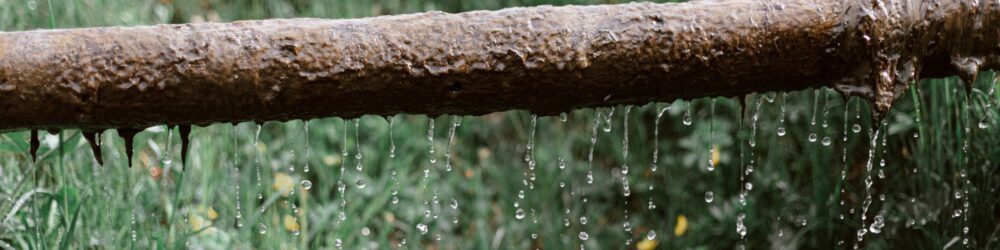
The pipe should have a minimum 1:100 fall toward the outlet. Install collection pits every 30 metres on long runs, and ensure proper connection to either stormwater systems or appropriate discharge points. Backfill the top 300mm with clay or topsoil to prevent surface water entering the drainage layer.
Redirect Surface Water Flow
Create positive drainage away from problem areas using a combination of grading and hard drainage features. Paths and paved areas need minimum 1:60 fall toward drainage points. If you can’t achieve this slope, install channel drains every 10-15 metres across the surface.
Garden areas should slope away from structures at minimum 1:20 gradient for the first 2 metres, then can flatten to 1:100. Use swales lined with river stones or plant with grasses that handle periodic flooding. Install catch pits where concentrated flows enter stormwater systems.
Select Appropriate Pipe and Materials
Use 100mm minimum diameter for main drainage runs, 65mm for secondary branches. Choose perforated pipe for subsurface drainage, solid pipe for carrying water to discharge points. Novaflo or equivalent HDPE pipe handles ground movement better than rigid PVC in unstable soils.
Wrap all perforated pipe in geofabric before installing — this prevents fine particles blocking the holes over time. Use 20mm clean metal around pipes, never mixed aggregate or sand which can wash into the pipe. Connect different pipe materials using flexible rubber couplings that allow for differential settlement.
Questions to Ask Your Drainage Contractor
Verify they understand NZS 4229 requirements for retaining wall drainage and can provide compliant designs. Ask about their experience with your soil type — Wellington clay requires different approaches than Christchurch gravel or Auckland’s volcanic soils. Request details on pipe gradients, outlet locations, and maintenance access.
Check they have proper equipment for trenching and compacting in wet conditions. Many drainage failures occur because contractors can’t properly compact bedding material in saturated ground. Ask about warranties on workmanship and whether they’ll return to check system performance after the next heavy rainfall period.
Why Proper Drainage Matters Now
Climate data shows increasing rainfall intensity across New Zealand, with more frequent extreme weather events expected. Auckland’s 2026 wet season damage demonstrates what happens when drainage systems can’t handle these conditions. Fixing drainage issues now prevents much more expensive structural repairs later.
Insurance companies increasingly exclude claims for gradual water damage or poor maintenance. A well-documented drainage system with proper engineering backing protects your investment and ensures compliance with building consent requirements for any future development work.