Concrete Driveway Preparation and Maintenance Guide for Auckland Properties
- Proper subgrade compaction to 95% Standard Proctor density is critical for preventing concrete slab failure in Auckland’s clay soils.
- Concrete driveways require minimum 100mm thickness with F6 mesh reinforcement under NZS 3109 for residential vehicle loads.
- Control joints must be cut within 24 hours and spaced every 3-4 metres to prevent random cracking in Auckland’s variable climate.
Essential Concrete Driveway Specifications
What Is Concrete Driveway Preparation?
Concrete driveway preparation encompasses the critical groundwork and planning stages before pouring concrete for residential driveways in Auckland. This process involves site excavation, subgrade preparation, formwork installation, reinforcement placement, and establishing proper drainage systems. Under NZS 3109 (Concrete Construction Standard), proper preparation forms the foundation for a durable driveway that can withstand Auckland’s unique environmental challenges including expansive clay soils, frequent rainfall, and moderate seismic activity.
The preparation phase directly determines the long-term performance of your concrete driveway. Auckland’s geology presents specific challenges with Waitemata Group sediments and volcanic clay soils that expand and contract significantly with moisture changes. Professional preparation addresses these conditions through proper subgrade treatment, adequate drainage, and strategic reinforcement placement. Many Auckland properties sit on reactive clay soils that can cause differential settlement if not properly managed during the preparation phase.
- → Subgrade must achieve 95% Standard Proctor density compaction to prevent settlement
- → Minimum 75mm granular base course required in clay soil conditions
- → Fall of 1:100 minimum toward drainage points to prevent water pooling
- → Formwork must be straight, level, and adequately braced for concrete pressure
Understanding Auckland’s Soil Challenges
Auckland’s predominant clay soils create unique challenges for concrete driveway construction that differ significantly from other New Zealand regions. The city’s volcanic and sedimentary geology produces highly plastic clays that can expand up to 15% when saturated and shrink dramatically during dry periods. This movement, known as heave and settlement, can crack poorly prepared concrete driveways within the first year if subgrade preparation doesn’t account for these conditions.
Effective preparation in Auckland requires understanding your specific soil classification through basic testing. Most residential areas contain CH (high plasticity clay) or CL (low plasticity clay) soils according to the Unified Soil Classification System. These soils require different preparation approaches – CH soils need deeper excavation and more robust base preparation, while CL soils may be suitable for direct concrete placement with proper moisture control. The key is achieving uniform bearing capacity across the entire driveway area.
- → Clay content above 30% requires engineered base course design
- → Plasticity index over 25 indicates high shrink-swell potential
- → Moisture content at placement should be within 2% of optimum
- → Subgrade CBR must exceed 5% for adequate bearing capacity
Essential Preparation Components
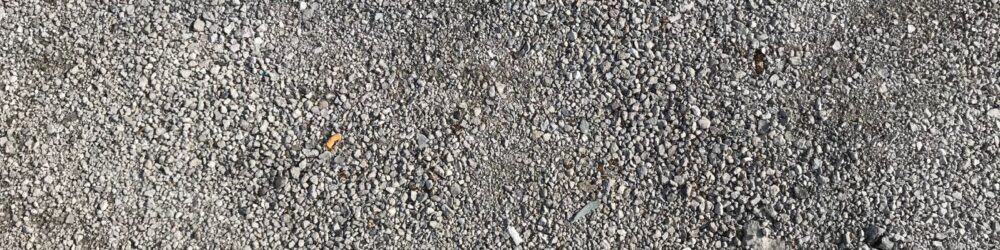
Successful concrete driveway preparation involves several interconnected systems working together. The subgrade forms the foundation layer and must be uniformly compacted to specified density using mechanical compaction equipment. In Auckland conditions, this typically means excavating 150-200mm below finished level to remove topsoil and install a granular base course. The base course, usually GAP20 or GAP40 aggregate, provides a stable platform and capillary break to prevent moisture wicking from clay soils into the concrete.
Reinforcement placement follows precise specifications under NZS 3109. Standard residential driveways require F6 mesh (6mm diameter bars at 200mm centres) positioned at mid-depth of the 100mm concrete slab. Mesh must be supported on chairs at 1200mm centres and lapped 300mm at joins with 40mm wire ties. Edge restraint through formed kerbs or integrated thickenings prevents lateral movement and provides long-term structural integrity. All reinforcement requires 40mm minimum cover from any concrete surface.
- → GAP20 base course compacted in 100mm lifts to 98% Standard Proctor
- → F6 mesh positioned 50mm from bottom of 100mm slab
- → Edge thickenings minimum 150mm deep for vehicle loading
- → DPM (damp proof membrane) required under concrete in wet conditions
Drainage and Fall Requirements
Proper drainage design prevents the most common cause of concrete driveway failure in Auckland – water-related damage. The driveway surface must fall away from buildings at minimum 1:100 gradient, with steeper falls of 1:50 preferred in high-rainfall areas. Auckland receives approximately 1200mm annual rainfall, making effective water management critical. Surface water should discharge to approved drainage points including council stormwater systems, soakage areas, or designed retention systems.
Subsurface drainage becomes essential where clay soils create perched water tables or where the driveway intersects natural drainage paths. French drains along driveway edges, constructed with 100mm agricultural pipe surrounded by 20mm drainage metal, can prevent water accumulation under the concrete slab. This is particularly important for driveways crossing natural contour lines or where cut-and-fill construction creates artificial drainage barriers.
- → Minimum 1:100 fall with 1:50 preferred for effective drainage
- → Surface water must not discharge onto neighbouring properties
- → Subsoil drainage required where water table within 600mm of formation
- → Drainage metal extends 150mm beyond pipe invert for effective collection
Concrete Specification and Placement
Auckland concrete driveways require specific mix designs to perform in local conditions. Standard specification calls for 25MPa concrete at 28 days with maximum 180mm slump for workability. The concrete should contain minimum 300kg/m³ cement with Type GP (General Purpose) cement suitable for most applications. In coastal areas within 1km of saltwater, Type SR (Sulphate Resistant) cement provides additional durability against chloride exposure.
Placement timing becomes critical in Auckland’s variable weather patterns. Concrete should not be placed when rain is forecast within 6 hours or when air temperature exceeds 30°C without adequate protection. Studies examining work patterns and environmental factors demonstrate how timing affects material performance and worker efficiency. Summer placements require windshields and curing compound application to prevent plastic shrinkage cracking, while winter placements may need protection from frost for the first 48 hours.
- → 25MPa concrete minimum with 300kg/m³ cement content
- → Maximum 180mm slump for adequate workability
- → Air temperature between 5°C and 30°C for optimal placement
- → Curing compound application within 30 minutes of finishing
Control Joints and Finishing
Control joints prevent random cracking by creating predetermined weak points where concrete can crack in straight lines. Auckland’s temperature variations and clay soil movement make proper jointing essential. Joints should be cut within 24 hours of placement when concrete has sufficient strength to prevent raveling but before internal stresses develop. Standard spacing places joints every 3-4 metres in both directions, creating panels with length-to-width ratios not exceeding 1.5:1.
Joint cutting depth must reach 25% of slab thickness, meaning 25mm deep cuts in 100mm slabs. Professional concrete saws with diamond blades provide clean, straight cuts that can be sealed with polyurethane sealant for appearance and debris exclusion. The finishing process includes float finishing for slip resistance and broom texturing perpendicular to the main traffic direction for vehicle traction in wet conditions.
- → Control joints cut within 24 hours at 25% slab depth
- → Joint spacing maximum 3-4 metres to control cracking
- → Broom finish perpendicular to traffic direction for traction
- → Polyurethane sealant in joints after 28-day cure period
Common Mistakes and Prevention
The most costly mistake in Auckland concrete driveway construction is inadequate subgrade preparation, particularly underestimating clay soil reactivity. Many DIY attempts fail because contractors skip proper soil testing and assume all ground conditions are similar. Clay soils must be tested for plasticity and moisture content, then treated accordingly. Attempting to pour directly onto uncompacted clay or during wet conditions virtually guarantees cracking within the first year.
Another frequent error involves incorrect reinforcement placement or omitting edge restraint details. Reinforcement sitting on the ground provides no structural benefit – it must be positioned at mid-depth using proper chairs and spacers. Similarly, many driveways fail at edges where vehicle loading creates cantilever forces that unrestrained concrete cannot resist. Professional edge details with adequate thickness and reinforcement prevent these failures. Rushing the curing process by removing protection too early or applying loads prematurely also compromises long-term durability.
- → Subgrade testing required – never assume soil conditions
- → Reinforcement must be supported at correct depth throughout
- → Edge restraint essential for vehicle loading areas
- → Seven-day minimum cure before vehicle traffic
- → Weather protection required for first 48 hours minimum
Key Takeaways
- → Auckland’s clay soils require specific preparation including 95% compaction, granular base course, and proper moisture control to prevent settlement and heaving
- → Concrete driveways need minimum 100mm thickness with F6 mesh reinforcement positioned at mid-depth, plus adequate edge restraint for vehicle loads under NZS 3109
- → Drainage design with 1:100 minimum fall prevents water damage, while control joints every 3-4 metres cut within 24 hours control thermal and shrinkage cracking
- → Weather timing is critical – avoid placement during rain forecasts or extreme temperatures, and maintain proper curing for minimum seven days before traffic loading
- → Professional soil testing and engineered solutions for problematic clay conditions save money compared to remedial work after premature failure
- → Quality preparation costs 20-30% of total project but determines 80% of long-term performance in Auckland’s challenging soil and climate conditions