Permeable Paving Requirements: New Zealand’s Updated Stormwater Management Rules
- Most NZ councils now require permeable paving for residential driveways over 40m² under updated stormwater bylaws.
- Permeable concrete pavers cost $45-65 per m² installed versus $35-45 per m² for standard concrete.
- Non-compliant driveways can face retrofit orders costing $8,000-15,000 for typical residential properties.
Permeable Paving Key Figures
Understanding the New Stormwater Requirements
New Zealand councils have significantly tightened stormwater management rules over the past 18 months, with most major centres now requiring permeable paving solutions for residential driveways exceeding 40m². This change affects Auckland, Wellington, Christchurch, Hamilton, and Tauranga councils directly. You need to understand these requirements before starting any driveway project, as non-compliance can trigger expensive retrofit orders.
The rules target impermeable surfaces that contribute to urban flooding. Traditional concrete and asphalt driveways create runoff that overwhelms stormwater systems during heavy rain events. Auckland Council estimates that residential driveways contribute 23% of urban stormwater volume during peak rainfall. You’re now required to manage this runoff on-site through permeable materials or detention systems.
Building consent applications must include stormwater management plans for driveways over the threshold. Your consent will specify infiltration rates, subgrade preparation, and maintenance requirements. Expect council inspections at base preparation and final completion stages.
Choosing Between Permeable Paving Options
You have three main permeable paving options that meet NZ council requirements: permeable concrete pavers, porous asphalt, and permeable concrete. Each option has different performance characteristics and cost implications for New Zealand conditions.
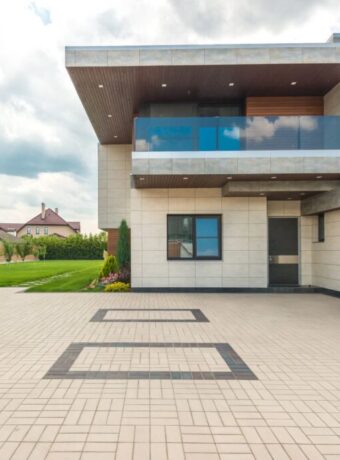
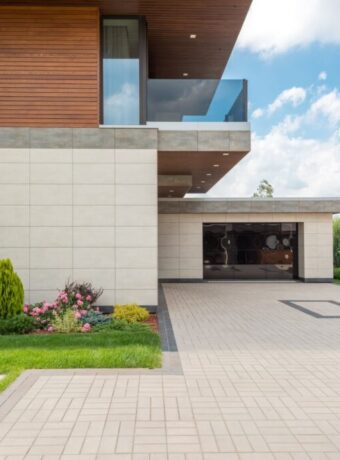
Permeable concrete pavers offer the most reliable long-term performance. These interlocking units allow water to drain through gaps filled with aggregate. Typical infiltration rates reach 150-200mm per hour, well above the 25mm/hour minimum required by most councils. Installation costs range from $45-65 per m² including subgrade preparation. Expect 20-25 year lifespan with proper maintenance.
Porous asphalt provides a smooth driving surface similar to traditional driveways. Water drains through the asphalt matrix into an aggregate base layer. Installation costs $40-55 per m² but requires specialist contractors familiar with the modified mix design. Performance degrades faster than pavers, typically requiring surface treatment after 12-15 years.
Permeable concrete creates a monolithic surface with enhanced porosity. Installation costs $50-70 per m² but offers excellent durability in freeze-thaw conditions common across Canterbury and Otago. The main drawback is difficulty with repairs – damaged sections require complete replacement rather than individual unit replacement.
Critical Installation Requirements
Proper subgrade preparation determines whether your permeable paving meets performance standards long-term. You must excavate to 300-400mm depth depending on your soil conditions and expected traffic loading. Clay soils require deeper excavation and possibly drainage systems to prevent water pooling at the interface.

The aggregate base layer needs specific grading to provide structural support while maintaining permeability. Use 20-40mm crushed aggregate for the bottom 200mm layer, topped with 50-100mm of 5-10mm aggregate. Avoid crusher dust or fine materials that will clog the system. Your supplier should provide grading certificates showing compliance with NZTA specifications.
Edge restraints are critical for permeable paver installations. Use concrete haunching or steel edging to prevent lateral movement under vehicle loads. Standard plastic edging used for garden borders will fail under driveway loads. Allow 2-3mm gaps between pavers and fill with 2-5mm aggregate, not sand which can wash out and clog drainage.
Surface falls should direct water toward planted areas or soakage zones rather than boundaries or buildings. Minimum 1:100 gradient prevents ponding while maximum 1:20 gradient prevents erosion of joint materials. Install inspection chambers at low points to monitor system performance and enable maintenance access.
Questions to Ask Your Contractor
Ask for evidence of previous permeable paving projects and council sign-offs. Many contractors claim experience with permeable systems but lack understanding of the specific subgrade and drainage requirements. Request references from jobs completed within the past two years where you can inspect the installation quality.
Confirm they understand your council’s specific requirements, as these vary between regions. Auckland requires different aggregate specifications than Christchurch due to seismic considerations. Wellington has additional wind exposure requirements for joint materials. Your contractor should reference the relevant council technical guides during their quote.
Question their maintenance recommendations and warranty coverage. Proper installation should include written maintenance schedules and performance guarantees. Be wary of contractors who cannot explain how to clean blocked joints or what happens if infiltration rates drop below council requirements.
Why This Matters for Your Project
These stormwater regulations represent a permanent shift in New Zealand construction practice, not a temporary policy initiative. Climate change projections show increasing rainfall intensity across most NZ regions, making stormwater management increasingly critical for urban infrastructure.
Getting your driveway right the first time avoids retrofit costs that typically exceed new installation costs by 40-60%. Council enforcement is increasing, with building warrant of fitness requirements now extending to residential stormwater systems in some regions. Your investment in compliant permeable paving protects both your property value and long-term maintenance costs.