Outdoor Living Space Design: Planning Multi-Zone Entertainment Areas for NZ Homes
- Multi-zone outdoor living spaces require careful consideration of wind patterns, sun orientation, and privacy screening to function effectively year-round.
- Building consent is required for covered outdoor areas exceeding 20m² or permanent structures like outdoor kitchens with gas connections under NZ Building Code.
- Material costs for a complete outdoor living zone range from $25,000-$65,000 depending on finishes, with concrete pavers and timber framing being most cost-effective options.
Outdoor living space costs
- Multi-zone outdoor living spaces require careful consideration of wind patterns, sun orientation, and privacy screening to function effectively year-round.
- Building consent is required for covered outdoor areas exceeding 20m² or permanent structures like outdoor kitchens with gas connections under NZ Building Code.
- Material costs for a complete outdoor living zone range from $25,000-$65,000 depending on finishes, with concrete pavers and timber framing being most cost-effective options.
Key spatial planning requirements
Effective outdoor living space design starts with understanding how different zones will function together. The cooking zone needs to be positioned downwind from dining areas to prevent smoke drift, typically 3-4 metres separation minimum. Dining areas work best with morning sun exposure but afternoon shade, particularly important in Auckland and Northland where summer heat can be intense.
Traffic flow between zones determines the overall layout success. A 1.2-metre minimum pathway width allows comfortable movement, with 1.8 metres preferred for high-use areas. The relaxation zone should feel separate from active cooking and dining spaces, achieved through level changes, screening, or strategic furniture placement.
Wind protection is critical for year-round usability. In Wellington and Canterbury, prevailing westerly winds require solid screening on the western boundary. Glass panels provide wind protection while maintaining views, but budget $450-$650 per linear metre for quality installations.
Material and construction options
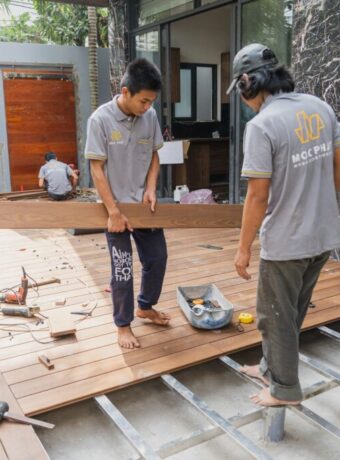
Flooring choice affects both cost and long-term performance. Concrete pavers on compacted GAP20 base cost $85-$120 per m² installed, offering durability and easy maintenance. Natural stone like Timaru bluestone runs $180-$250 per m², while composite decking ranges $220-$320 per m² including subframe.
Overhead structures define spaces and provide weather protection. Timber pergolas using H5-treated pine posts cost $180-$280 per m², while powder-coated aluminium systems run $320-$480 per m². Retractable roof systems add $800-$1200 per m² but provide flexible weather protection.
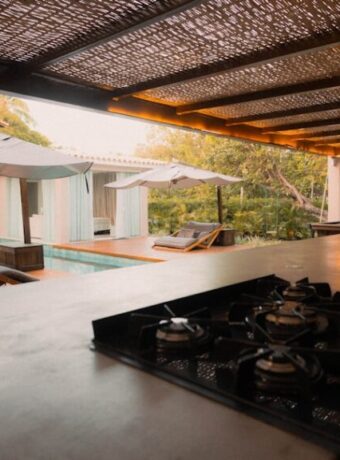
Outdoor kitchen construction varies significantly in complexity. Simple built-in BBQ areas using concrete block and stone cladding cost $3,500-$6,500. Full outdoor kitchens with gas connections, sinks, and refrigeration require building consent and typically cost $15,000-$35,000 including professional installation.
Design configuration strategies
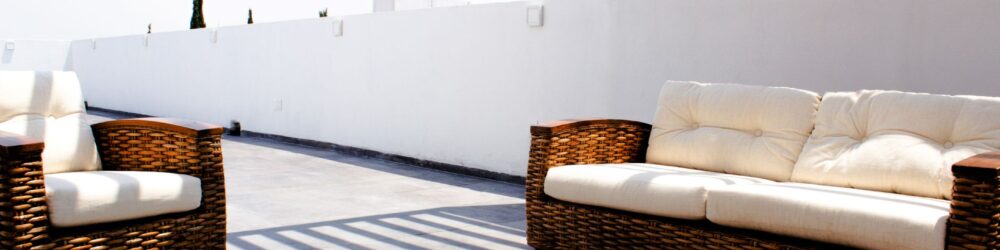
Linear configurations work well on narrow sites, arranging cooking, dining, and relaxing zones in sequence along the house wall. This maximizes space efficiency but can feel cramped on sections under 600m². L-shaped arrangements provide better separation between zones and work effectively on corner sites.
Clustered designs place the outdoor kitchen as a central hub with dining and relaxing areas radiating outward. This configuration requires larger sections (800m² minimum) but creates excellent flow for entertaining. The kitchen island becomes a natural gathering point while maintaining clear sight lines to all zones.
Stepped level changes define zones without requiring screening walls. A 150-200mm height difference between dining and relaxing areas provides psychological separation while maintaining visual connection. Retaining walls using concrete blocks cost $280-$380 per linear metre including drainage.
Weather and site considerations
Drainage planning prevents water pooling and foundation issues. Outdoor living areas need 1:100 minimum fall away from the house, with additional drainage where roof runoff concentrates. Clay soils common in Auckland require careful subsoil drainage, adding $45-$65 per linear metre for agricultural drainage pipe installation.
Seismic considerations apply to permanent structures in NZ’s earthquake zones. Outdoor kitchen foundations need engineer certification for structures exceeding 2.4 metres height or supporting significant loads. Foundation requirements typically specify 500mm deep concrete footings in stable ground, increasing to 750mm in liquefaction zones.
Plant selection affects maintenance and seasonal appeal. Coastal areas require salt-tolerant species, while inland regions need frost-hardy options. Established screening plants like griselinia or photinia cost $35-$55 per plant in 45-litre bags, requiring 1.5-metre spacing for solid screening within 3-4 years.
Other considerations
Building consent requirements vary by council but generally apply to covered areas exceeding 20m², permanent gas connections, and structural elements like overhead beams. Consent processing typically takes 6-8 weeks and costs $1,800-$2,800 depending on complexity.
Electrical installation for outdoor zones requires RCD protection and weatherproof fittings rated IP44 minimum. LED strip lighting under benches and pergola beams provides ambient lighting at $85-$120 per linear metre installed. Power outlets for outdoor appliances need GFCI protection, adding $180-$220 per outlet including trenching.
Future-proofing considerations include provision for outdoor heating, sound system wiring, and potential pool integration. Ducting for future services during initial construction costs 20% of retrofitting later. Water supply for outdoor sinks and irrigation should include 32mm supply lines to handle multiple simultaneous uses during entertaining.